Catalogue value is not a price
Stanley Gibbons catalogues list a value for every British stamp. It is a retail price for a fine example from a dealer’s stock, and the trade treats it as a unit of account rather than a sum anyone pays. Common material changes hands at a small percentage of catalogue, and only scarce stamps in fine condition approach it. An album that “catalogues at £5,000” and sells for £400 is the normal outcome, not a swindle.
What a specialist does with an album
They turn the pages quickly and stop rarely. They are looking for the small number of stamps that carry the value: early issues, high values, unmounted mint sets from before the 1950s, errors and varieties, and rarities of colour or watermark. Everything else is bulk and is priced by the album, the box or the kilo.
| Sells individually | Sells as bulk |
|---|---|
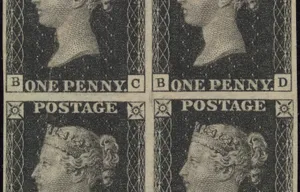
| Penny Blacks, early Penny Reds, 2d Blues | Victorian and Edwardian low values in quantity |
| High values: £1 and £5 stamps of any reign | Commemorative sets from the 1960s onwards |
| Unmounted mint sets before 1953 | Mounted mint and used sets after 1953 |
| Errors, inverted watermarks, missing colours | Presentation packs and year books |
| Rare Commonwealth and colonial issues | Worldwide “one of each country” albums |
Mint, unmounted and used
A mint stamp has never been used. Unmounted mint means the gum is untouched by a hinge. Mounted mint means a hinge has been stuck to the gum, and the price drops, sharply for twentieth-century issues. Used means postmarked. For Victorian stamps a fine used copy is worth more than a mounted mint one in many issues, since so few survived unused; for modern stamps unmounted mint is what counts.
Condition
Centering, perforations, gum and freshness of colour. Pulled perforations, thins, creases, toning from a damp loft and hinge remnants each cost money. Store the album somewhere dry until it is sold, and do not remove stamps from it.
Decimal stamps and postage
Mint decimal stamps from 1971 onwards are bought by the trade for use as postage, at a discount to face value of roughly a fifth to a third. A box of presentation packs is worth its face value less that discount, and no more. First day covers are covered in their own guide.
How to sell
Ask two auction houses with stamp departments for a free opinion, with photographs of the pages that look early or valuable. They will say whether the collection is worth individual lotting, a single lot, or a dealer’s offer. For anything under a few hundred pounds a dealer’s offer is quicker and the difference is small. For collections with early material, auction with the good stamps lotted separately is where the value is realised. The auctions guide explains the charges.